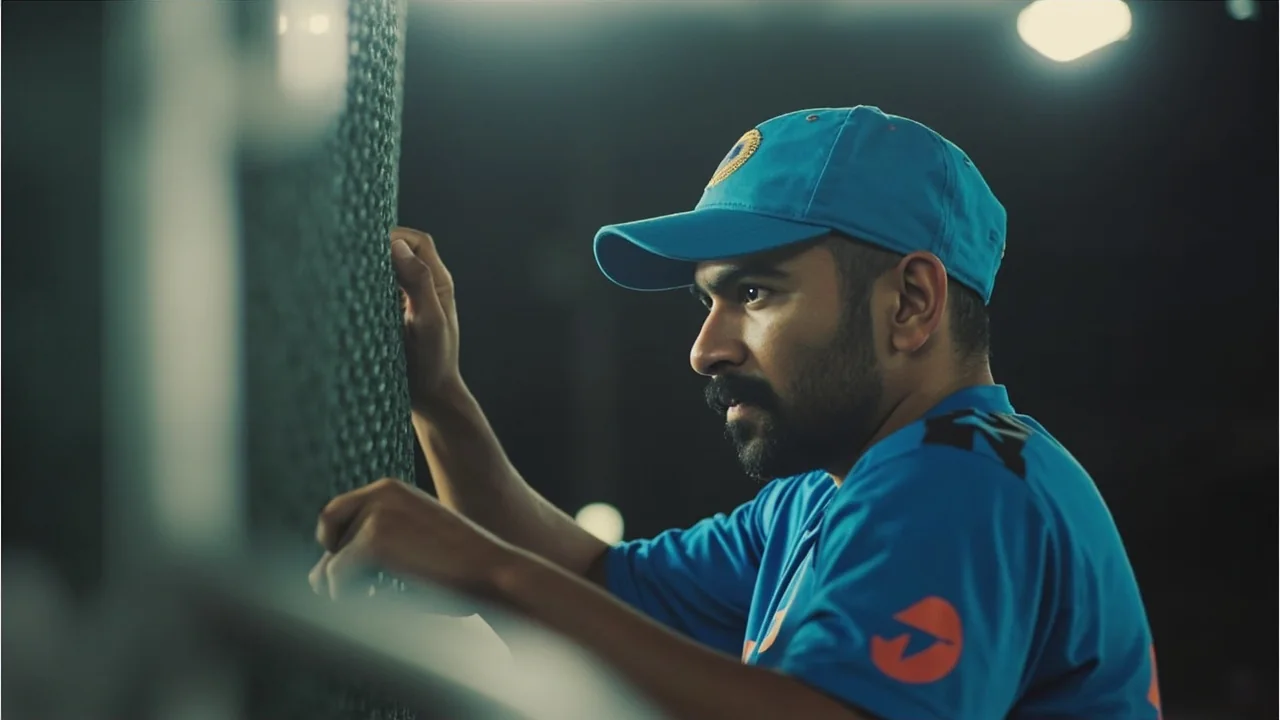
India's red-ball calendar opens in Galle on August 15 with a hundred-workday question sitting on the selection table: how do you structure a five-day attack without the bowler who most often decides a session on a flat surface? Bumrah is out of both Tests after a Centre of Excellence assessment in Bengaluru found his knee injury needed longer than the tour window allows, a confirmed medical call that hands the captain a workload problem the side has not had to solve on a Sri Lankan surface in two years.
The tour itself is short, two Tests in thirteen days, the second starting in Colombo on August 23. That compressed tour window is the practical reason the current absence feels larger than the number of matches would suggest. There is no third Test to rotate a bowler back into, no warm-up fixture to test a replacement workload, and no room to absorb a setback once the first ball is bowled in Galle. The selection committee has to build an XI from a squad that will only be together in one form of the game.
According to the News24 report, the senior selection committee was given an earlier message that Bumrah would be available for at least part of the series. That message was revised after a follow-up evaluation at the Centre of Excellence, and the change is what triggered the current internal review. The BCCI has not published a final medical summary, and the published record is the PTI report's account of a virtual meeting between VVS Laxman, Centre of Excellence staff and chief selector Ajit Agarkar.
The ten-day window shapes every other decision
The calendar is tighter than it looks. The squad is expected to be named in the coming days, the team departs shortly after, and the only match-day preparation is the optional warm-up time the BCCI schedules on tour. Bumrah's exclusion changes what every other bowler has to do on a flat surface, and it does so inside a window that does not allow a second look at the original shortlist.
That compression has three visible effects on selection. First, the workload math has to be set before the squad leaves India, not revised during the first Test. Second, the seam-bowling allrounder question becomes a batting-versus-bowling question because there is no spare Test to keep the attack balanced. Third, the spinner's role shifts from a fifth-bowler option to a primary attacking option on day three onwards, which changes how the XI is built at the top rather than at the bottom.
The captain will not have a starting attack that includes a bowler who can comfortably operate at Test pace on a flat track for twenty overs without a break. That single change forces a different field-setting template, a different new-ball rotation, and a different definition of what a "good over" looks like in the first hour of a Test in Galle.
The Galle pitch and what it asks of the new ball
Galle is a surface that has rewarded patience in the first innings more than burst in recent seasons. The morning session usually gives the quicks something if the ball is hard and the overhead lights are absent, but the second session tends to flatten, and the third and fourth days usually turn. A bowler who can hold one end with the seam upright and threaten the stumps from both sides is the most valuable asset. Without Bumrah, the search narrows to a bowler who can do something close to that for spells of four to six overs at a time.
Mohammed Shami, after a competitive return in early 2026, is the closest stylistic match. He has the seam position and the stump-to-stump line that Galle rewards. The familiar counter-argument is workload: Shami has not bowled a full Test match since the England series, and his overs are a finite resource. The selectors' practical job is to design a rotation that protects Shami for the spells that matter most, not the spells that simply fill the day.
Mohammed Siraj moves from third-seamer to first-change. His role against left-handers becomes more important on Indian pitches in Sri Lanka because the older ball turns less and the pace bowler has to do the early work. Mukesh Kumar and Arshdeep Singh are the practical candidates for the third-pacer slot, and the choice between them is the kind of decision that tells the room what the team thinks it can control on day one. Siraj and Shami together can take thirty overs in a morning, but the captain has to plan those overs with the same care that used to be reserved for a single spell from the lead bowler.
Where the captain's tactical options actually sit
The captain's tactical options in Galle are different in kind from the ones that exist in England or Australia. The new ball is shared, the first hour is shorter in terms of available help, and the spinner usually has to take the second new-ball wickets once the shine is gone. Without Bumrah, the captain cannot roll a strike bowler for a six-over spell to break a partnership; the captain has to choose the moment for the first change, define the field for the change, and accept that the second-change bowler will be spell-restricted.
There is a related field-placement question. Bumrah's lines are usually the lines that justify a deep point, a leg slip, and a wide second slip. Without his angle, the captain has to choose between an attacking cordon that may not be paid off by the bowling, and a defensive cordon that concedes the run-scoring areas the spinner will need. The tactical cost of one less attacking field is small in total, but it repeats across every session of the Test.
The DRS picture also changes. Bumrah's review-and-reverse-swing calls have, in past tours, given the captain a second voice on the bowler's wicket. Without him, the captain has to rely on the slip cordon, the keeper, and the bowler's own judgment. The mechanic is the same; the volume of second opinions is smaller. The captain also has to plan the use of the fast-bowling allrounder differently, because that allrounder is now a fifth-bowler option rather than a fourth-bowler safety net.
The Harshit Rana question sits alongside the Bumrah one
Harshit Rana's name has been a quiet part of the same news cycle. According to the PTI account, the selectors passed Rana through a fitness check that was followed by a fresh hamstring setback, and the same review is now covering the workflow that produced that clearance. The practical effect on the Sri Lanka squad is that the seam-bowling bench is shorter than the squad announcement will suggest, and the selectors have to keep one slot for a bowler who can be called up in case the workload plan needs an extra body.
Washington Sundar is the most likely seam-bowling allrounder in the XI if his fitness clears. His role is significant because it allows the captain to play five bowlers without losing the batting depth at No. 8. The trade-off is that Sundar's first-class bowling has been managed carefully across the last two years, and a five-day Test on a spinning surface is a different ask from the white-ball spells he has bowled recently. The captain has to plan for the contingency that Sundar can only bowl ten to fifteen overs a day, which forces a different balance in the spinner-rota.
The Sai Sudharsan question is a different selection call entirely. The left-hander is reportedly taking long net sessions while recovering from a leg issue, and the selectors are weighing whether a debut in Galle is the right introduction. The argument for picking him is his recent first-class record; the argument against is the tour-window risk that follows a fresh injury. The decision will shape the middle order and, consequently, the bowling balance the captain can afford.

What the Colombo Test makes harder
The second Test in Colombo comes eight days after the first. That gap is short enough to prevent a five-bowler rotation, and it is long enough to require a workload reset. The captain has to enter the Colombo Test with a clear picture of which bowler has bowled how many overs, which bowler has carried the new ball, and which bowler is on a reduced load. The R. Premadasa surface is usually a touch quicker than Galle, which means the seam attack has to remain a wicket-taking option through the first innings rather than just a holding option.
The Colombo Test also offers a different spin template. Two finger-spinners in the same XI has been a familiar Indian shape on Sri Lankan surfaces, but the workload cost of having two finger-spinners through a five-day Test is real. The captain has to decide whether the second spinner is a Jadeja-style parallel option or a Kuldeep-style point-of-attack option, because the rotation looks different in each case. The decision is a tactical one, not a personnel one, and it sits with the captain rather than the selectors.
There is a wicket-keeping question that links both Tests. The standard Indian red-ball keeper has been Rishabh Pant, and the workload around his batting position is a separate variable. The captain's choice of how far down the order the keeper bats affects the bowling balance; a keeper at No. 6 usually means four bowlers plus one allrounder, while a keeper at No. 7 usually means five bowlers. The numerical difference is small, but the tactical consequence is significant when the lead bowler is missing.
Why the work happens before the squad lands
The interesting part of the selection picture is the work that goes into the squad announcement rather than the announcement itself. The selectors have to set the rotation plan, the field templates, the spin-bowling share, and the captain's decision-tree for first change before the XI knows the condition of the Galle pitch. The team will have one optional warm-up day, and that is not enough to do the kind of planning that has to be done in the dressing room before the toss.
That is the structural difference between a tour with Bumrah and a tour without him. With Bumrah, the captain can experiment. Without Bumrah, the captain has to commit to a plan earlier, in more detail, and with fewer second-guesses. The same applies to the medical staff. The PTI account of the workflow review points to a window in which the medical clearance has to be communicated to the selection committee, and the gap is the kind of operational issue that benefits from a documented process rather than a single meeting.
The selectors' internal review is therefore expected to publish three things, not one: a clear voice on final fitness status, a documented sequence for the squad announcement deadline, and a definition of what a net session proves compared to a match simulation. Those are the items that survive a single tour, and they are the items that change the next selection meeting when the next injury file lands on the desk.
What the next ten days actually look like
The squad is expected to be named shortly, the team departs soon after, and the Galle Test begins on August 15. That is the compressed cycle inside which the captain, the coach, and the selectors have to agree on the bowling plan, the field templates, and the medical workflow. The selection committee has named a chief selector, the head coach has been in place since the England series, and the captain has had a full domestic season to weigh the all-format options. The work is not starting from zero; it is starting from a set of decisions that have to be made in a smaller window than usual.
For readers who want to follow the squad announcement, the warm-up match, and the Galle Test over the next ten days, the Come Sports news desk will publish the squad notes, the playing XI, and the captain's first-change template as they are announced. The wider cricket calendar, the World Test Championship standings, and the related selection news continue to be tracked at latest cricket news from the Come Sports desk.