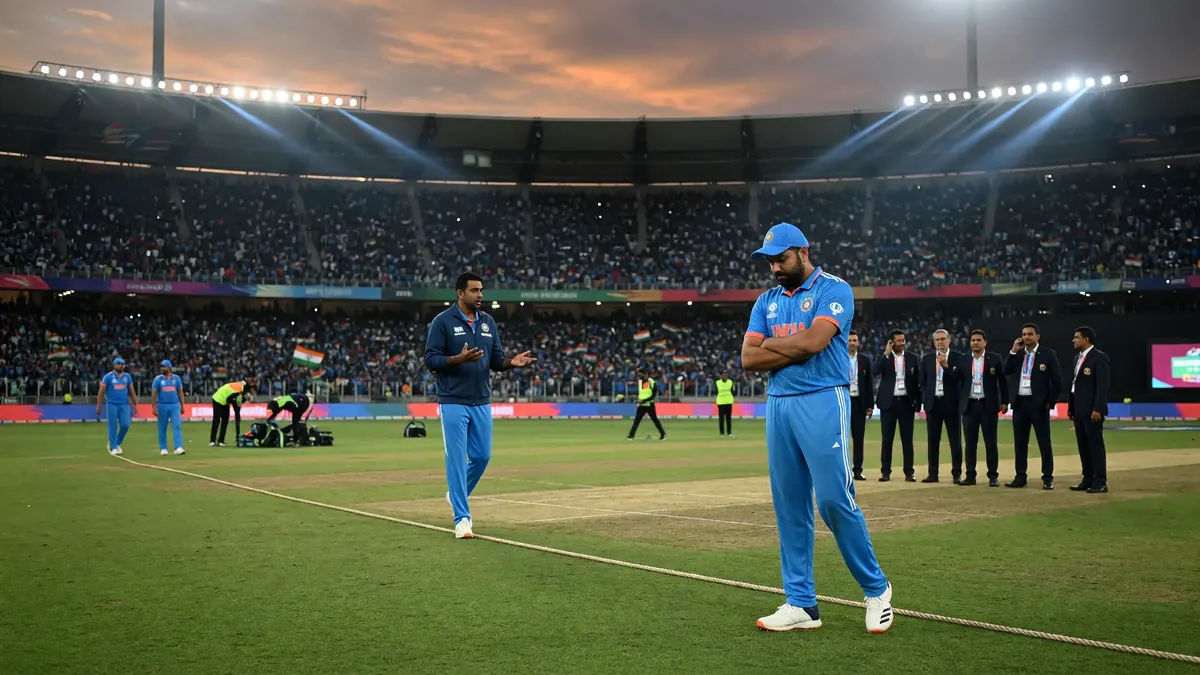
Rohit Sharma answered the loudest week of his ODI summer with 138 off 110 balls at Lord's, becoming the first Indian batter to score a one-day international century at the ground. Hours and days around that knock, former India spinner Ravichandran Ashwin still argued that the retirement rumours circling the captain were not empty chatter — even after the BCCI moved quickly to shut them down.
The sequence matters because it binds three separate strands into one story: a media claim that the third ODI against England might be Rohit's last international appearance, an official denial from BCCI secretary Devajit Saikia, and Ashwin's on-camera refusal to treat the episode as mere outside noise. The cricket, meanwhile, offered its own reply. Rohit's century at Lord's was not a quiet survival innings. It was a full-throttle statement on a stage where India had never before produced a male ODI hundred.
For Indian fans following the white-ball side through a compressed calendar, the debate is less about one newspaper headline and more about who occupies the opening slot on the road to the 2027 ODI World Cup. Ashwin's intervention — delivered on his YouTube channel — forced that question back into public view just as the on-field narrative seemed ready to move on.
What the Lord's innings actually changed
England's home ODI conditions reward batters who can manipulate length early and then accelerate without losing shape. Rohit's 138 off 110 deliveries checked both boxes. The landmark detail is unambiguous: he became the first Indian batter to score an ODI century at Lord's. For a player whose international career has already been redefined once by format retirements, the knock arrived with unusual timing.
He had already stepped away from T20 internationals in June 2024 and from Test cricket in May last year. The remaining international lane, as described around the current cycle, is the 50-over path toward 2027. When a report suggested the Lord's fixture could double as a farewell, the innings stopped being only a personal milestone. It became the cleanest available counter-argument available to any batter under scrutiny: runs, tempo, and a ground first.
Ashwin's reading of the same innings was more layered. He framed the hundred as part of a comeback curve after an injury suffered in the latter stages of IPL 2026, an issue that forced Rohit to miss a few Mumbai Indians matches. That recovery framing matters: the 138 sits inside a return-to-peak story, not a farewell victory lap, even while the board publicly rejected any farewell script for the Lord's fixture.
How the rumour started — and how the board answered
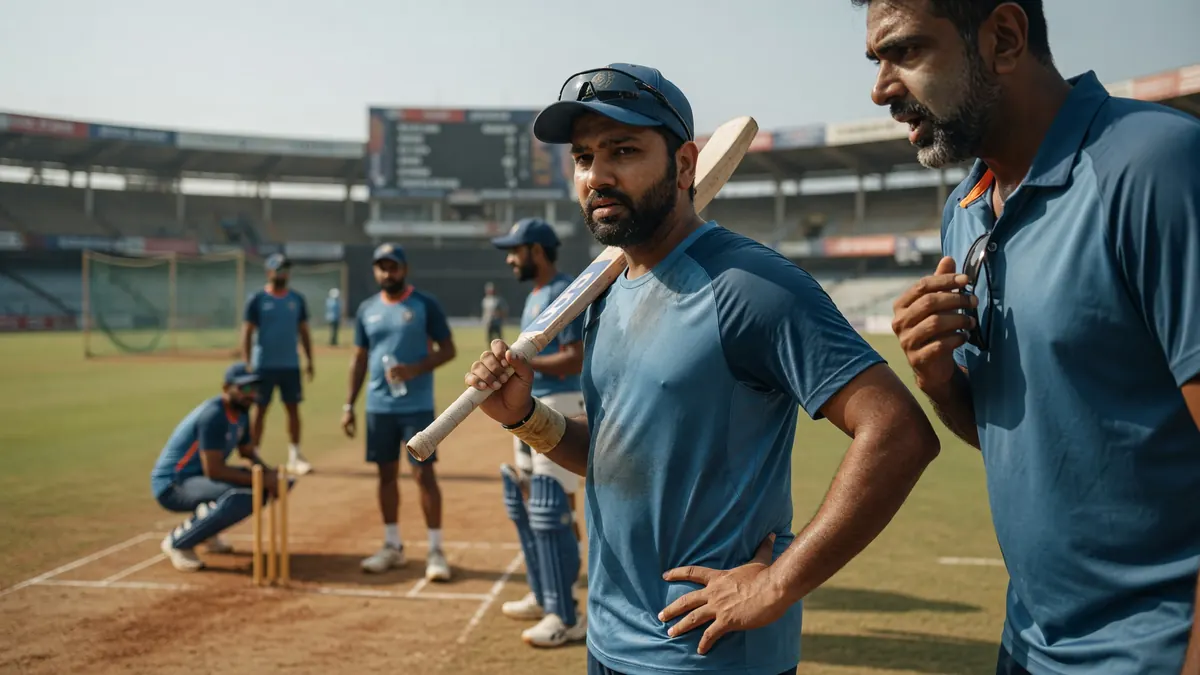
The spark was a media report claiming Rohit was no longer part of India's 2027 ODI World Cup planning and that the third England ODI might be his final international appearance. The same report, according to coverage of the episode, said chief selector Ajit Agarkar and head coach Gautam Gambhir favoured Yashasvi Jaiswal for the opening berth in India's 50-over structure.
Those are serious institutional claims if true. They touch selection hierarchy, succession planning, and the public standing of a captain who still produces match-defining ODI innings. They also travel faster than formal clarification. Social platforms amplified the farewell framing before officials could answer in full sentences.
BCCI secretary Devajit Saikia did answer. He categorically denied the rumours and insisted the Lord's ODI would not be Rohit's farewell. That is the board's on-record position: no send-off script, no confirmed exit, no acceptance of the farewell premise. For players, staff, and broadcasters, that denial resets the immediate working assumption. For Ashwin, it did not erase the question of why the story appeared at all.
Ashwin rejected the “outside noise” label, cited a Tamil saying that there is no smoke without fire, and said he does not think Rohit doubts he can play the 2027 World Cup.
Ashwin's framing is careful in one respect and blunt in another. He does not present selection-meeting minutes. He does argue that the report did not arrive from pure invention, and he anchors that reading in the smoke-and-fire proverb. He also draws a bright line around Rohit's self-belief: in Ashwin's view, Rohit is not mentally walking away from 2027.
Ashwin's argument, stripped of theatre
Strip away the proverb and the point is institutional rather than mystical. Senior players of Rohit's stature rarely become the subject of farewell chatter without some combination of form questions, workload management, succession pressure, or internal debate about the next cycle. Ashwin is saying the chatter had a source of heat, even if the BCCI correctly rejected the farewell packaging.
That distinction is easy to lose in headline culture. “There was fire” is not the same sentence as “Rohit has been dropped” or “Rohit has retired.” Ashwin is describing signal inside the noise. Saikia is describing the board's official reality on the day of the match. Both can be reported without forcing them into a false either-or.
Ashwin also widened the frame to include Virat Kohli. Although the original rumour focused on Rohit, Ashwin said India cannot simply move on from Virat and Rohit if those batters still want to play, citing credentials, almost 12,000 runs for Rohit, and the fan following attached to both names. That is advocacy from a recently retired peer, not a selection communique — but it explains why farewell chatter around either batter travels so quickly.
The injury subplot that reframes the hundred
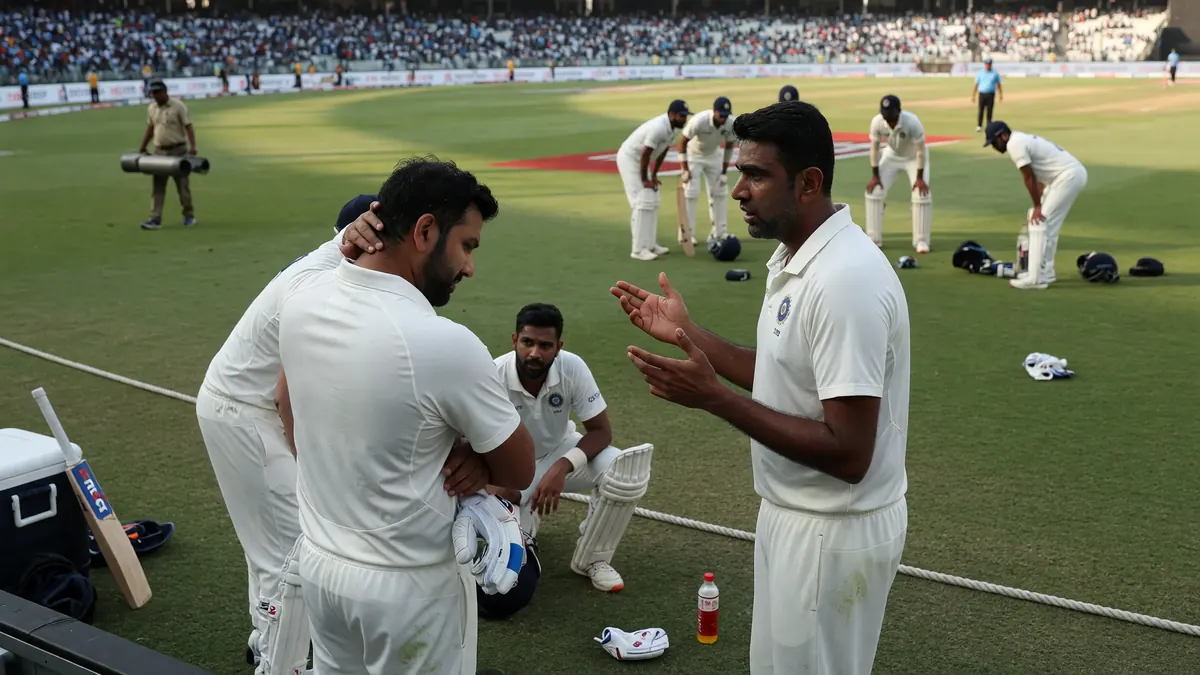
Without the IPL 2026 injury context, Rohit's Lord's century reads as pure pedigree. With it, the innings looks like a mid-recovery checkpoint. Ashwin said Rohit was still working his way back after an injury in the latter stages of the league that forced him to miss several Mumbai Indians games. That detail changes how selectors, analysts, and fantasy managers should weight the 138.
The practical test is simpler than any counterfactual. Over the next block of ODIs, does Rohit's strike rate, boundary share, and decision-making against pace and spin keep climbing as the body settles — or does the Lord's night remain a high point inside a longer rebuild?
India's calendar supplies a clear next sample. The side's following ODI assignment is a three-match home series against the West Indies beginning on September 27. Home conditions, a familiar support network, and a shorter travel burden usually give senior batters cleaner preparation windows than an away England leg. If Rohit is indeed climbing out of an injury trough, those three matches are the first structured audit after Lord's.
Succession pressure and the Jaiswal question
The report that linked Agarkar and Gambhir to a preference for Yashasvi Jaiswal as the long-term opener is the policy core of the controversy. Jaiswal represents a different batting age-profile and a different risk curve: high ceiling, aggressive intent, and a shorter international sample than Rohit. Selecting him is not only about today's XI. It is about who owns the new-ball overs in 2027 when the World Cup fielding restrictions and powerplay patterns reward early intent.
None of that automatically ends Rohit's claim. ODI cricket still pays a premium for batters who can bat through phases, manipulate fields in the middle overs, and finish against a set defence. Rohit's Lord's hundred sits exactly in that skill set. The more accurate framing is competition for a scarce resource — the opening pair — rather than a binary purge.
Boards rarely announce succession timelines in public while a captain is still producing. Denials such as Saikia's protect dressing-room stability. They do not freeze internal modelling. Ashwin's “smoke and fire” line is best read as a reminder that modelling continues even when the public line is calm.
Why Ashwin's voice carries here
Ashwin is not a fringe pundit inventing a segment. He is a recently central India spinner with long exposure to the same high-performance environment, and he has built a direct-to-fan channel where he speaks without the filters of a post-match mixed zone. That combination makes his wording harder to dismiss as generic studio filler.
It also creates a responsibility for anyone republishing him. The Come Sports desk is treating his remarks as attributed analysis, not as leaked selection minutes. The verified public facts remain: the report existed, the BCCI denied a farewell, Rohit scored 138 at Lord's, Ashwin said there was fire behind the smoke, and India next plays West Indies in ODIs from September 27.
Readers tracking India for fantasy or form guides should separate those layers. Board denial governs the official squad narrative. Ashwin governs the interpretive debate. The scorecard governs the performance baseline. Conflating the three produces louder takes and weaker decisions.
What fantasy and form readers should actually track
If you build ODI sides around Indian openers, the practical checklist after this week is short and concrete. First, treat Rohit as active in the 50-over pool unless a later official update says otherwise. Second, weight the Lord's 138 as strong evidence of timing and intent, tempered by Ashwin's recovery framing after the late-IPL 2026 injury absences. Third, keep Jaiswal in the same conversation for upside and future role security, especially if India experiments with left-right pairs or aggressive powerplay combinations at home.
Role clarity still beats rumour velocity. An opener who faces the new ball, a middle-order batter who owns the 30th to 40th over, and a finisher who hunts the death overs produce different fantasy distributions even when all three are “in form.” Rohit's historical ODI value concentrates in the first two of those jobs. Any selection wobble that moves him down or out would re-price the entire top order — which is precisely why farewell speculation moves markets so quickly when it appears.
Kohli's inclusion in Ashwin's defence matters for the same pricing reason. Ashwin argued that India cannot casually drop either batter if they want to continue, both because of runs and because of the crowds attached to their names. For a World Cup cycle, public legitimacy and on-field output are not fully separable. That does not freeze younger players out. It does mean any transition has to be earned in public performance windows, not only in closed-door preference stacks.
The September 27 marker
India's next ODI block — three home matches against the West Indies from September 27 — is the first clean calendar checkpoint after the England leg. It is also the first chance for the batting group to show whether Lord's was a one-off surge or the start of a sustained white-ball stretch.
Watch three plain selection and performance signals. One: does Rohit retain the new-ball role across the series? Two: how does his intent against pace compare with the Lord's tempo once the ball softens? Three: does Jaiswal's presence in squad conversations translate into XI minutes, or does the hierarchy hold while the board's public line remains steady?
Those are observable selection and performance facts. They matter more than replaying the same rumour cycle. Ashwin has already said he believes the smoke had a fire beneath it and that Rohit himself is not mentally walking away from 2027. Saikia has already said Lord's was not a farewell. The West Indies series will not settle the entire World Cup cycle, but it will replace speculation with a fresh sample of overs, partnerships, and roles.
Balanced reading of a noisy week
Indian cricket's information market runs hot because the stakes are public and the personalities are global. A single report can frame a captain's evening before a ball is bowled. A single denial can cool broadcast language without ending private debate. A single peer with a camera can reopen the file by refusing the “outside noise” label.
The disciplined reading is unromantic. Rohit produced a landmark ODI hundred at Lord's under a cloud he did not officially acknowledge as a farewell. The BCCI rejected the farewell premise. Ashwin rejected the idea that the premise was invented from nothing. Jaiswal's name entered the succession frame through the same report. Kohli was pulled into the defence by Ashwin on credentials and following. The next scheduled ODI examination begins at home against the West Indies on September 27.
Everything beyond that list is interpretation. Interpretation is allowed — Ashwin offered his, and this desk has mapped the implications for form tracking — but it should stay labelled as interpretation. The runs at Lord's are not a rumour. The board denial is not a rumour. Ashwin's proverb is not a selection paper. Hold those categories apart and the week becomes legible instead of merely loud.
For ongoing match briefs, squad notes, and form updates from the same desk, keep an eye on Latest Cricket News as India turns from the England assignment toward the home ODI window.
Rohit's immediate task is simpler than the discourse around him: stack more ODI samples that match the Lord's intent while fitness continues to settle. The board's immediate task is equally plain: pick the best available XI without feeding farewell theatre. Between those two jobs sits the real contest for India's 50-over future — and it will be decided in overs, not in recycled rumour cycles.